• It's Just a Flag
  • Between The Pillars
  • In Passing
  • The Candace Project
  • Through The Blinds
  • IRL
  • Whispers
  • Architectural Studies
  • About
  • Terms of Use
  • Blog
  • Menu

Joseph Saunders

  • It's Just a Flag
  • Between The Pillars
  • In Passing
  • The Candace Project
  • Through The Blinds
  • IRL
  • Whispers
  • Architectural Studies
  • About
  • Terms of Use
  • Blog

Contax TVS i Review

July 28, 2016

After getting bit by the compact point and shoot bug with the Leica Mini I was left with wanting more. I started looking around for something with more features and better build quality and I was looking at Ricoh GR's and Contax T's and even the Minolta TC-1 but I couldn't fathom spending that kind of quiche on a point and shoot. I wanted something a bit more sophisticated than I could put around my neck or just carry in my had when I am going somewhere that doesn't really demand a "big" camera and I just didn't want to break the bank. After digging around the internet and trying to find a camera that somewhat fit the criteria I came across the Contax TVS line. These cameras were just like the Contax T's but they had zoom lenses and where a third of the price and I settled on the TVS I the first of the three models for a few reasons but really it came down to a fantastic price. Let's just say it doesn't hurt when you lose out on an item on eBay to reach out to the seller and let them know that if the winner doesn't pay you'll buy and it just might work! The one that I need up getting was in mint condition with the felt /satin display box with metal lens cover, lens hood, and uv filter. This was so close to a full set but unfortunately, this set was missing the strap and regular plastic lens cover, soft carrying case, and manual.
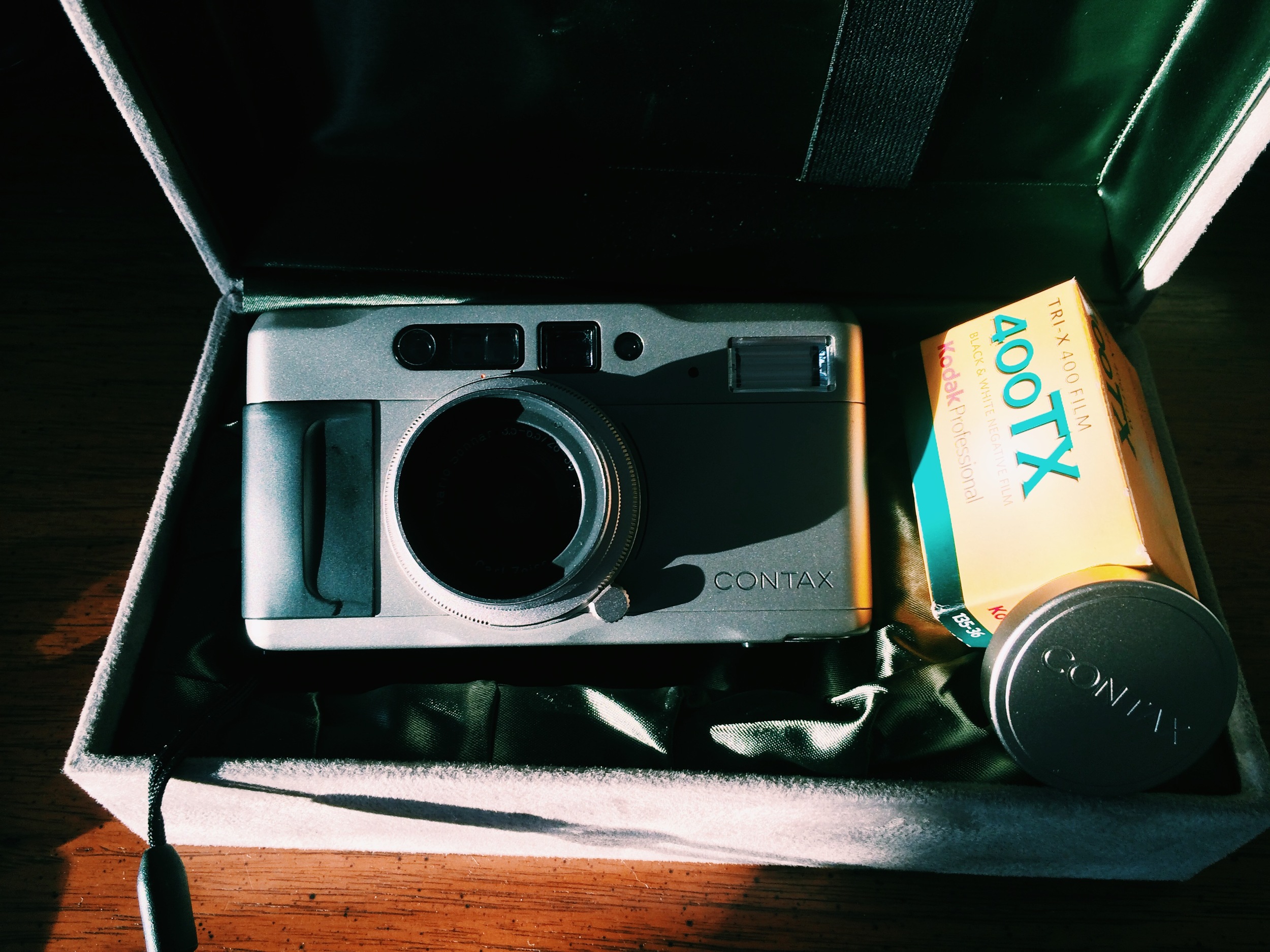
First day I received this baby, free roll of Tri-x!

First day I received this baby, free roll of Tri-x!

Overview

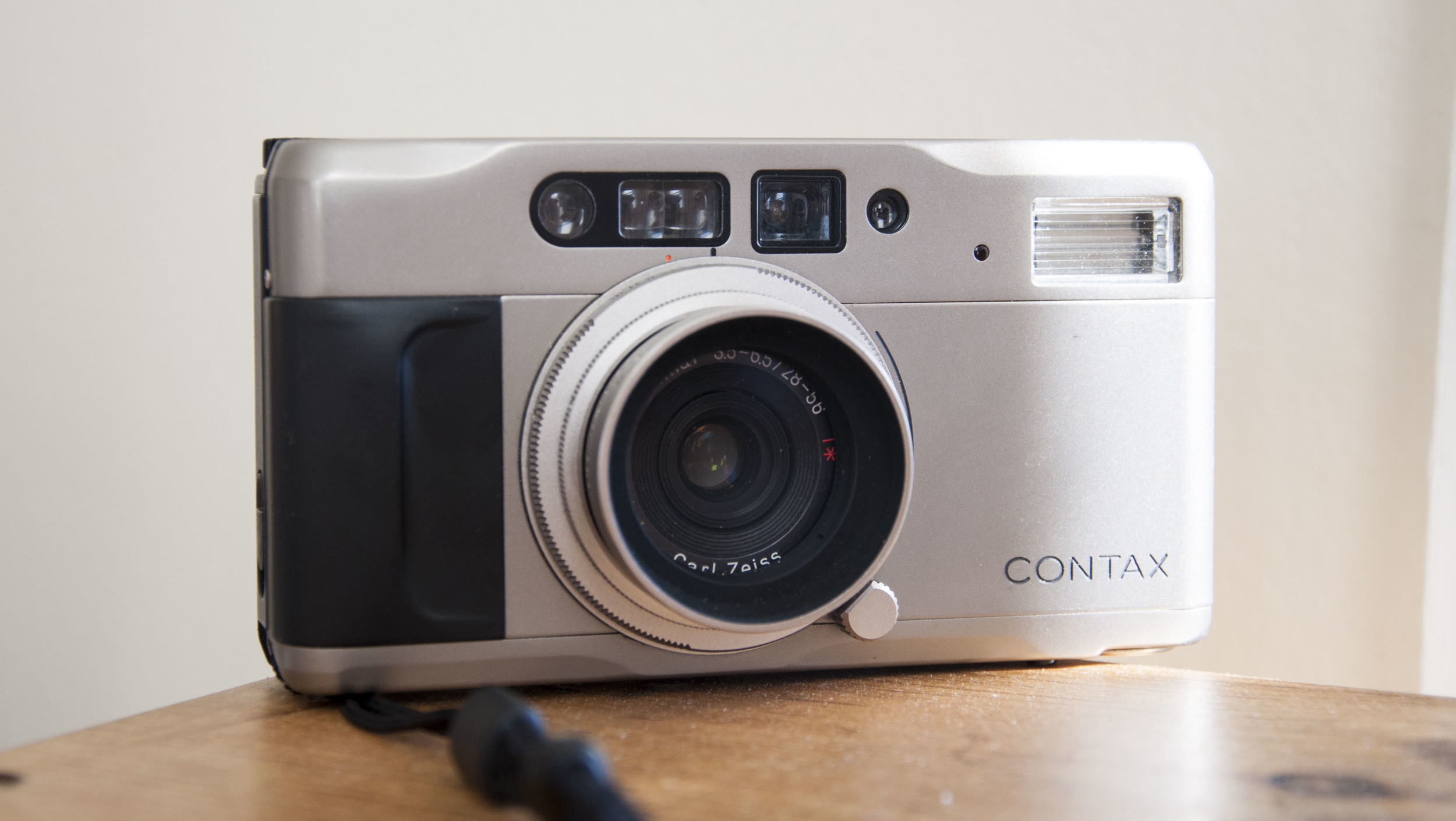
The Contax TVS i is a high-end zoom aperture priority compact point and shoot camera that Contax put out that is highly overlooked compared to the other Contax point and shoots. One of the reasons it's overlooked is because its a zoom lens point and shoot with a Carl Zeiss Vario Sonnar T* 28mm-56mm with a F/3.5-6.5 when zooming, also there is 6 elements, 6 groupings. So it coined as not being as sharp as the fixed Contax T's. But I can vouch for this camera that it is in fact tac sharp at 28mm and when you zoom to other focal lengths. Sticking with the lens of the camera, what really drew me to this camera is the way you zoom the lens with a what I want to call a "dive knob" that controls the power of the camera and the zoom of the lens.  On the lens, you have an aperture ring that ranges from P and F/3.5-16 that is very ridged and very satisfying when adjusting the aperture. On the front of the camera, there is a built in flash that is quite good but obviously, it has its limits with it being a point an shoot. Next to the flash is a tiny circle that is for the self timer light, next to that is the light sensor, followed by the viewfinder, and then focusing window, and finally the AF assist beam emitter. 
You can see that Drive Knob that is across from the Contax logo to the left
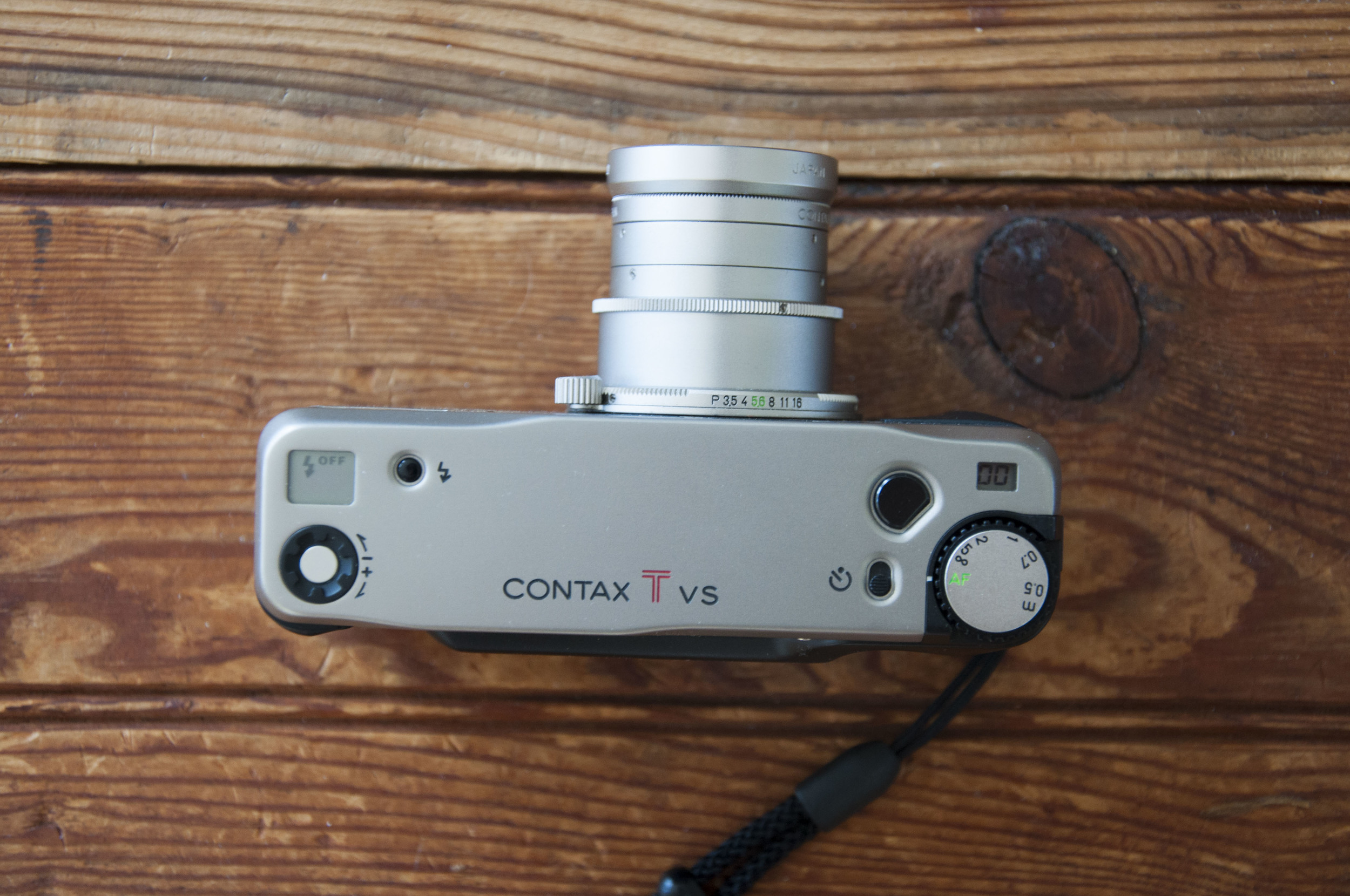
You can see that Drive Knob that is across from the Contax logo to the left

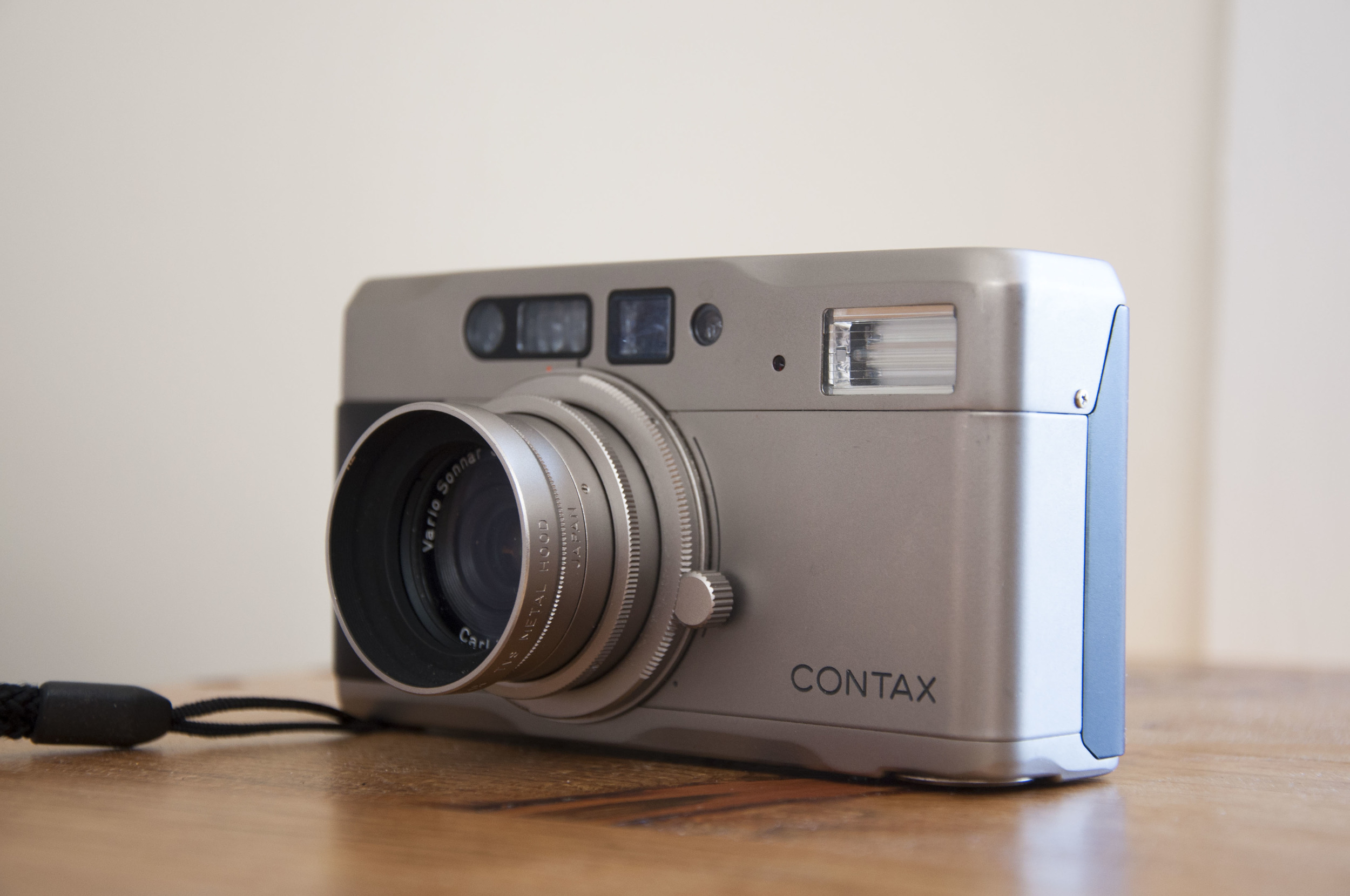
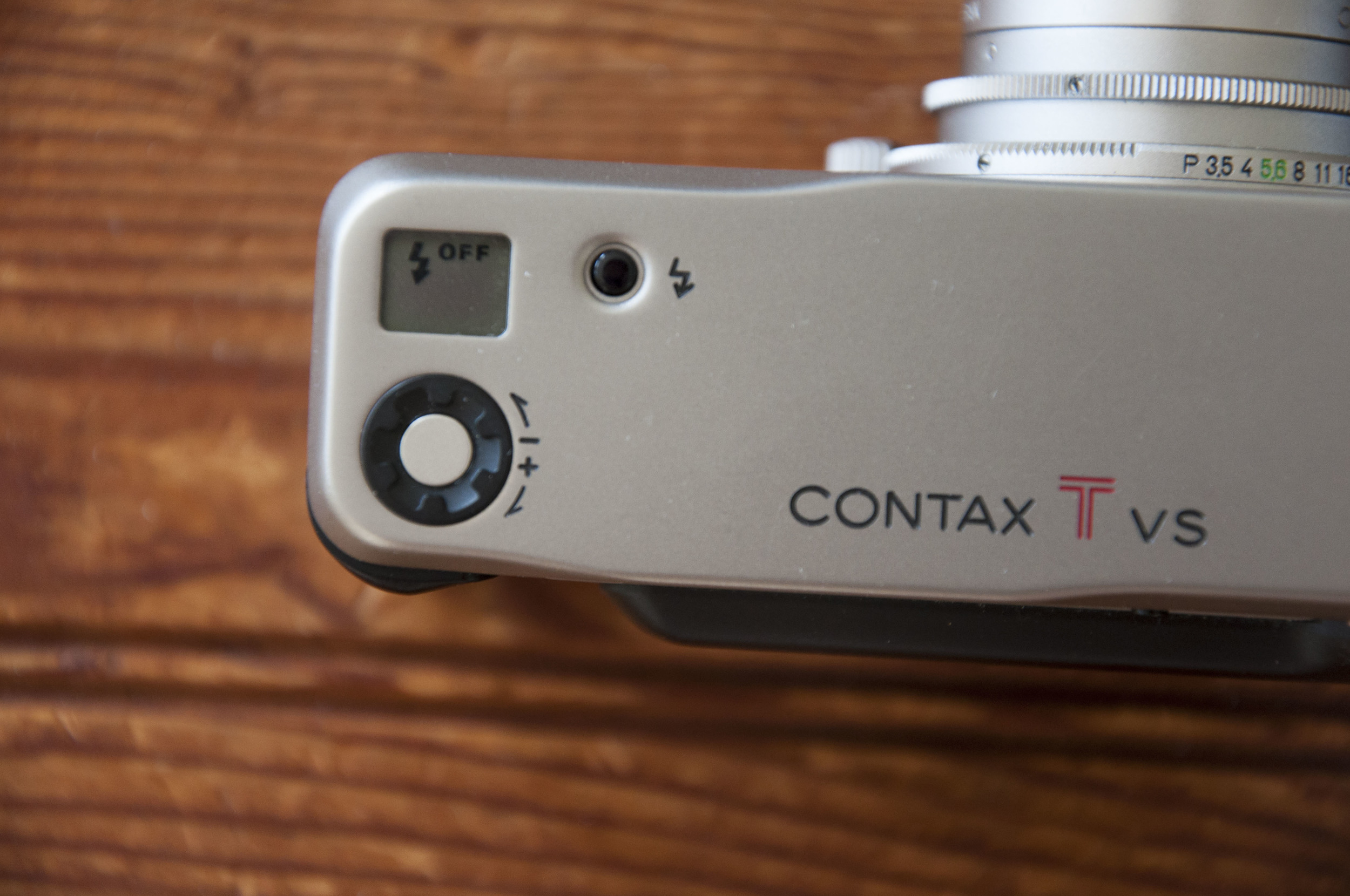
A view of the whole top of the camera with the lens fully zoomed with lens hood and uv filter attached. 

A view of the whole top of the camera with the lens fully zoomed with lens hood and uv filter attached. 

Now we find ourselves on top of the camera and the layout of the top of there camera is extremely minimal and very functional. Starting left to right we have a small LCD screen that displays flash shooting modes and a button next to it to program the flash. Just a little bit more on the flash is that it's defaulted to auto but you can change that to always off by a few different buttons pushing and holdings. Just under that, we have the exposure compensation dial or wheel, that helps if you want to push film since this camera sets the ISO by DX coding. Across the top, you find the sexy Contax logo you find the self-timer and above that is the shutter button that you half press for focus and exposure lock. Finally, we have another LCD screen that is the exposure counter and that is always on even the camera is off, which is a nice touch. Also, that LCD screen displays the lens focal length when the shutter button is depressed halfway which is quite nice.  Lastly, you have the focus dial that has AF and then different distances in meters that you can use for manual scale focusing, and the dial is pretty sturdy when locked in AF but has been bumped a few times when I was shooting.
Here you can see the exposure compensation dial , flash LCD and Flash mode button.
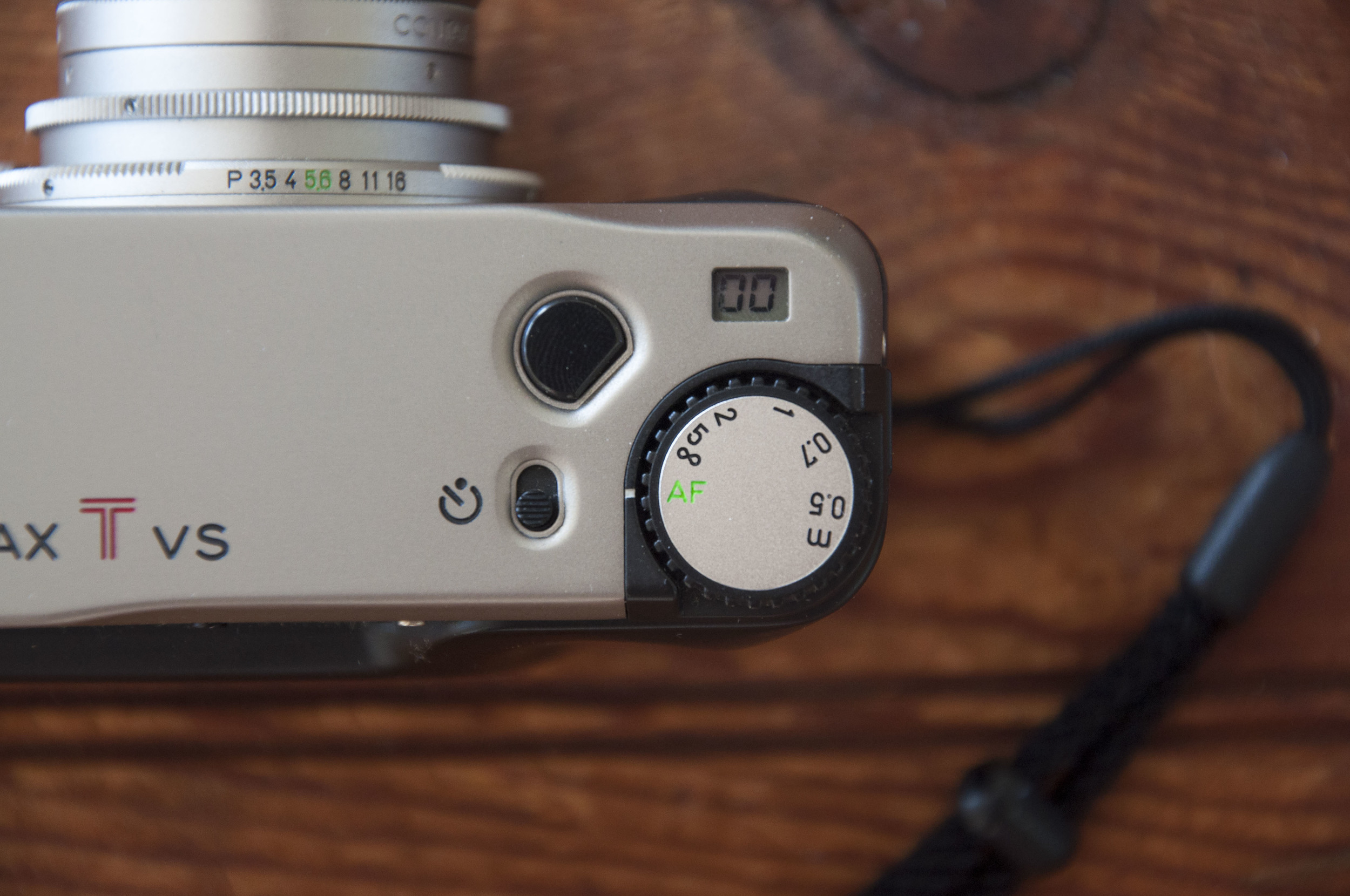
Here you can see the exposure compensation dial , flash LCD and Flash mode button.

Now the back of the camera is a little different because I have a data back on it and I don't even use it and haven't bothered trying to because it doesn't interest me. But the plus side of having the data back on the camera is that it has a better thumb rest than the stock back, unfortunately, the back does make the camera a little more bulky in terms of girth. Now, this camera has a "panorama" mode and it's not a real panorama mode because it just masks off the top and bottom of the frame but it is fun to have and use.
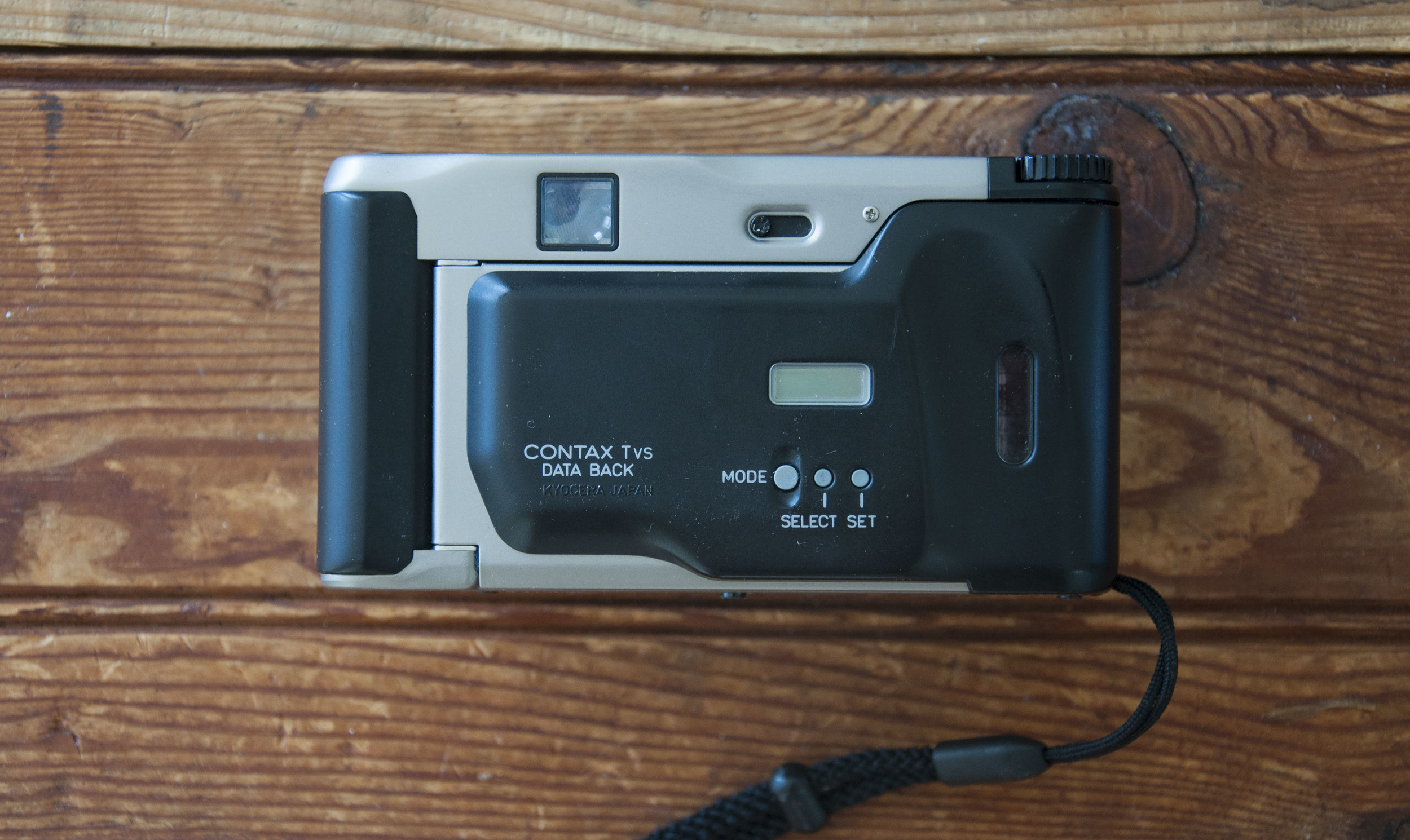
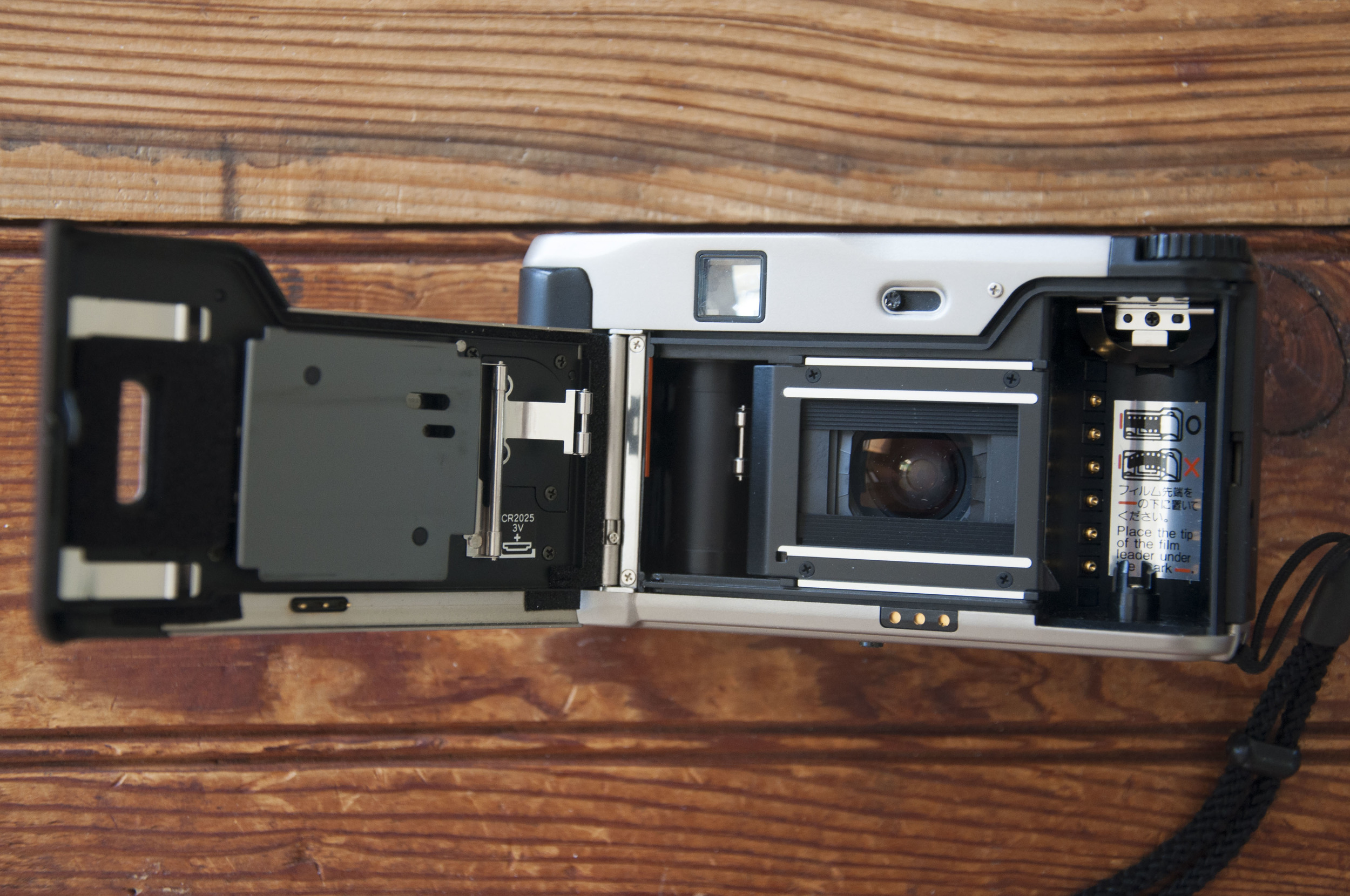
The bottom of the camera there is the standard tripod socket and the battery compartment that takes a DL123a or a CR123A battery. Then right next to that is the rewind button for manual rewinds. 

The viewfinder is a really interesting part of the camera and it takes some getting used to it to understand what it's displaying. In the middle of the viewfinder is the oval which I believe controls the focus and metering as center-weighted, below that is a green aluminated bar the displays the shutter speed and wheather you are in program mode or not. Then there are a series of arrows and circle that tells you whats in focus or whats not. I will be inserting two pages from the manual to clear explain this because it is some what confusing. 

This screen shots will explain the viewfinder a lot better than me (obviously because its the manual...duh...)screen shots from http://www.butkus.org/chinon/index.htmlIf you don't know butkus it is a site that has every camera manual possible.

This screen shots will explain the viewfinder a lot better than me (obviously because its the manual...duh...)

screen shots from http://www.butkus.org/chinon/index.html

If you don't know butkus it is a site that has every camera manual possible.

Handling 

The handling of this camera is quite good, and I touched on some things about handling in the over of the camera but I want to go in-depth about it here. First of all the camera has a really nice weight to it and it should since its built out of titanium! In the overview, I talked about the camera having a data back with a bigger thumb rest which gives a good grip when caring it around in hand all day. It also has a small indent on the from the camera where your others fingers will hang out and it is a different material and it does provide some good grip when your hand is sweaty. The shutter button is in a perfect position for your pointer finger and your thumb is in a great spot to adjust the manual focus.
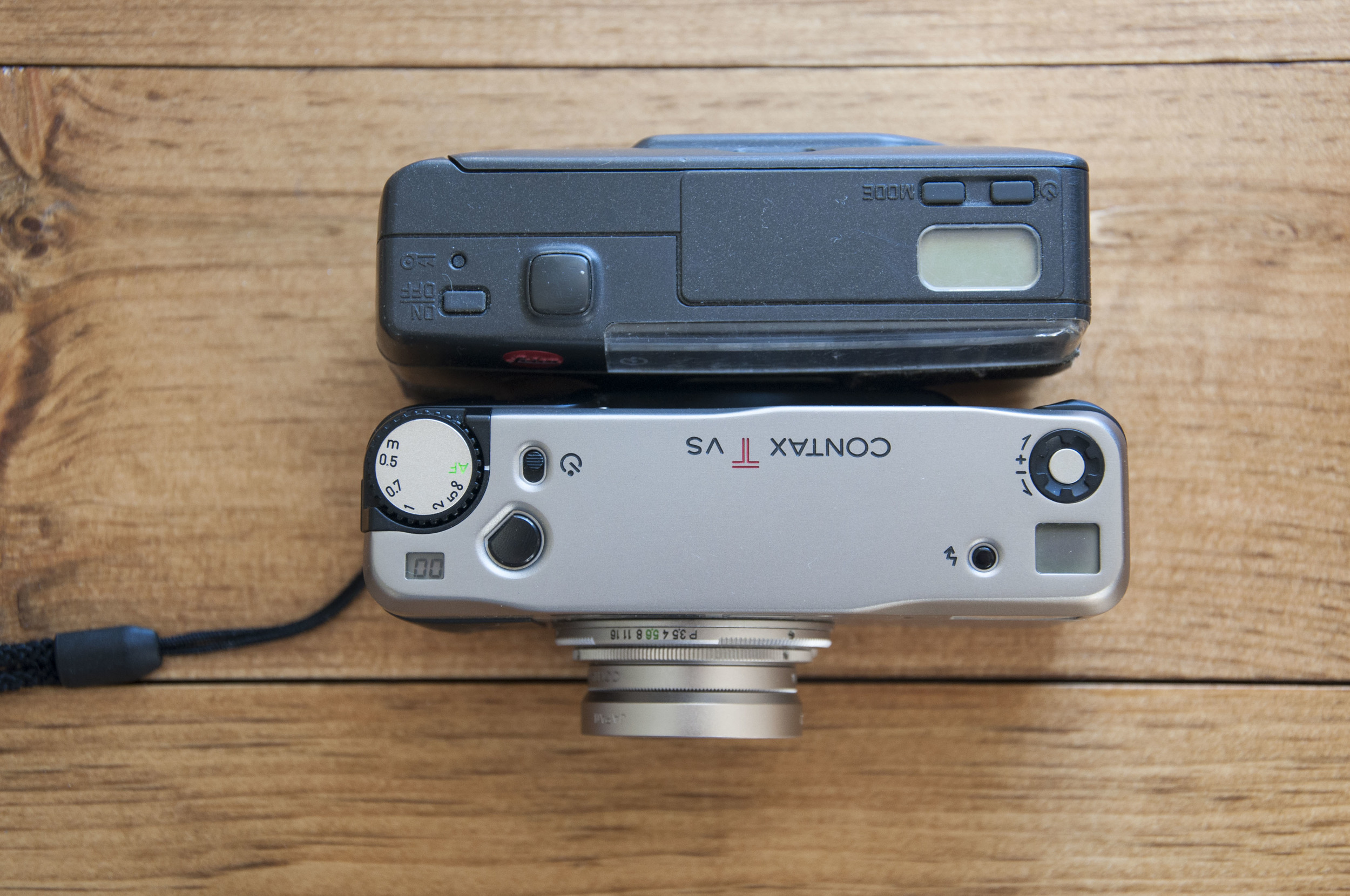
 Size compasison of the Contax TVS and the Leica Mini and you can see the the TVS is a bit slime and longer but that lens sticks out a bit with the uv filter and hood which are both removable.
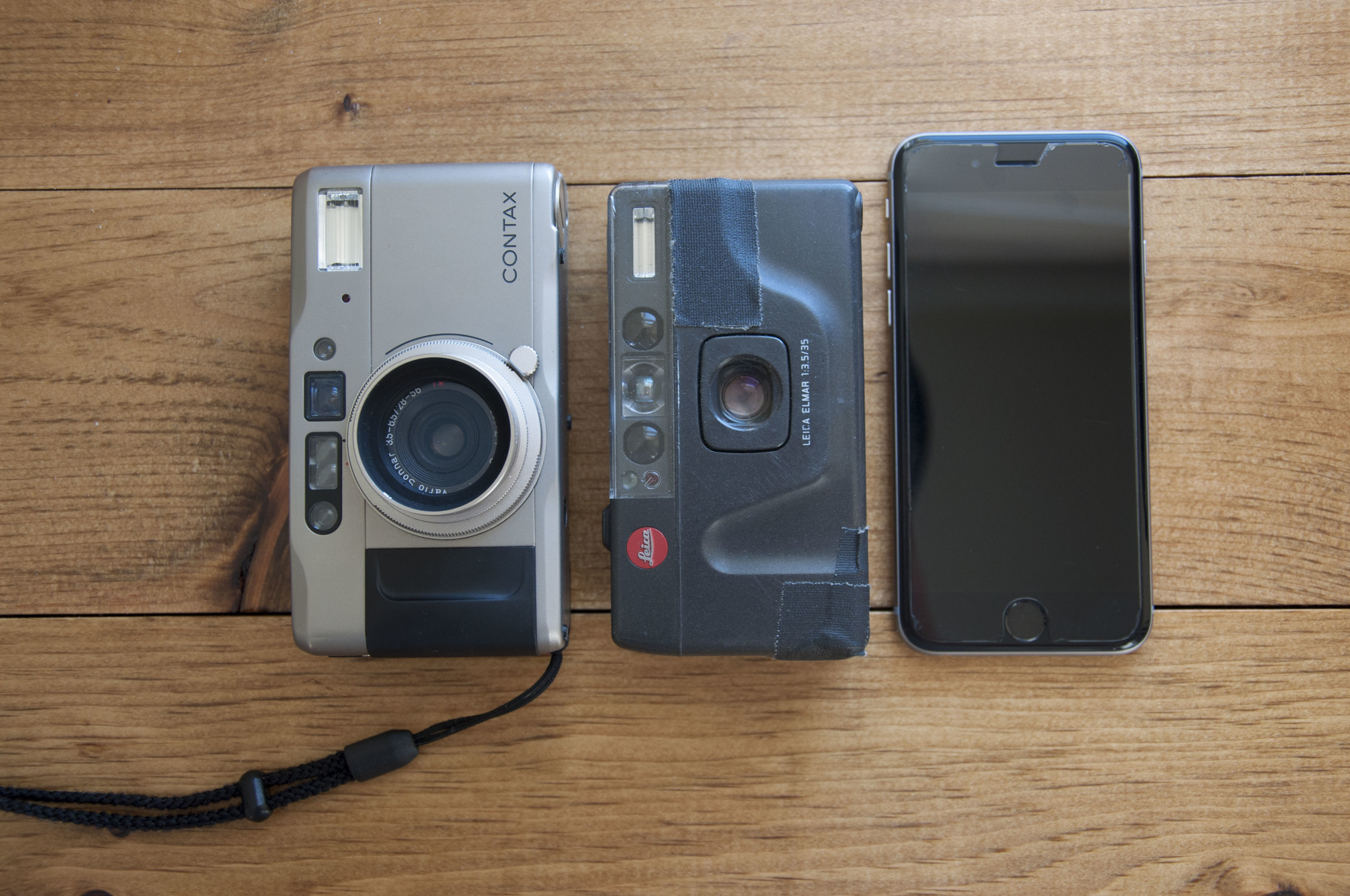
 Size compasison of the Contax TVS and the Leica Mini and you can see the the TVS is a bit slime and longer but that lens sticks out a bit with the uv filter and hood which are both removable.

Contaxt TVS, Leica Mini, Iphone 6s

Contaxt TVS, Leica Mini, Iphone 6s

Operating the aperture is pretty easy but sometimes annoying that your fingers some times get in the from so I suggest changing it before putting it up to your eye. Now the manual says for changing the focal length is to use the textured ring around the barrel of the lens but I prefer to use the drive knob because you can use it with one finger and your had doesn't block the viewfinder. 

With all that considered the camera feels really great in the hands and it is a joy to use and shoot. I feel like its a great upgrade from the Leica Mini.

The Not So Good

I always post this in every review that I do because it's important to know a cameras flaws since no camera is perfect and I want to give a well-rounded review.

Now with that being said, let's get to the camera's flaws. First of all the autofocus is really slow and wicked picky on what it wants to focus on and shooting in the streets with a fast pace and having people walking towards you it's a bit frustrating but the camera is old. A work around the slow autofocus is using the manual focus. The second thing that is the auto advance, it is pretty loud and there is no way to have it from not advancing after a shot. What I mean by that is the Leica Mini is bloody loud and when you took a shot and still holding down the shutter button the camera would not advance the form until you released the button. Now that is a fucking cool and simple feature that I wish this camera had, but you can't have them all. The viewfinder is a bit small for me since I wear glasses but it's not awful but the amount of stuff in that viewfinder sometimes is quite distracting. The biggest one is how careful you have to be with theses camera since Contax isn't around anymore, but there is a company Nippon Photoclinic  that will repair them If they do break but again they are fragile. Lastly, the manual focus dial is a bit lose and sometimes can get bumped but if you make the habit of checking it before shooting you will be fine.

Images

Now I have shot a lot of film with this camera since I have had it for about a year now and I can say it can handle any film. So far I have shot some Tri-X with it and Portra 400 and Fuji Acros with it and they have all come out stunning. 

First Roll. Tri-X developed in Sprint chemistry and scanned on Epson V700

First Roll. Tri-X developed in Sprint chemistry and scanned on Epson V700

Snow in April. Tri-X developed in Sprint chemistry and scanned on Epson V700

Snow in April. Tri-X developed in Sprint chemistry and scanned on Epson V700

A Shot on Panorama Mode. Tri-X developed in Sprint chemistry and scanned on Epson V700

A Shot on Panorama Mode. Tri-X developed in Sprint chemistry and scanned on Epson V700

Kodak Porta 400. Developed and scanned  by my local camera store. Water view in my home town on Cape Cod,MA

Kodak Porta 400. Developed and scanned  by my local camera store. Water view in my home town on Cape Cod,MA

Kodak Porta 400. Developed and scanned  by my local camera store. Crane Beach, Ipswich,MA

Kodak Porta 400. Developed and scanned  by my local camera store. Crane Beach, Ipswich,MA

One of the first rolls of Kodak Porta 400. Developed and scanned  by my local camera store that I have since stopped going to because of the shit scans not so great prices but I started using another place.

One of the first rolls of Kodak Porta 400. Developed and scanned  by my local camera store that I have since stopped going to because of the shit scans not so great prices but I started using another place.

Kodak Porta 400. Developed and scanned  by my local camera store. A beautiful shot of my girlfriend Candace.

Kodak Porta 400. Developed and scanned  by my local camera store. A beautiful shot of my girlfriend Candace.

Lastly some Fuji Acros 100. Developed on Sprint Chemistry and scanned on Epson V700.

Lastly some Fuji Acros 100. Developed on Sprint Chemistry and scanned on Epson V700.

Conclusion 

Honestly' I think this is one of my favorite cameras I have bought and I don't think I could sell it because it's a great camera to take with you for a quick trip or a long trip, it is really up to any challenge. I really think it's a solid camera that gets overlooked by a lot of premium compact cameras and I think it should be up there with them. You can get them for a song on the second- hand market and they will last you if you treat them with love. The only reason they go unnoticed is that it's a zoom lens and not many people are too keen on that but fuck them, this camera is amazing.  If you are in the market for a fantastic point and shoot and you don't want to break the bank for a T2/T3 or Ricoh Gr look at the Contax TVS line and you surely won't be disappointed.

Cheers!
Tags: contax, contax tvs, contax tvs i, camera review, leica, joseph saunders, camera blog, review, film camera review, film, camera, 35mm, point and shoot film camera, kodak, kodak portra, kodak tri-x, fujifilm, fuji acros, acros
6 Comments

Leica R7 Review

July 07, 2016

Remember when I said the Leica Mini was my first taste of Leica? Well, I finally upgraded to the Leica R7. An opportunity arose that I got a chance to have a Leica R7 on loan for a while with an Elmarit-R 28mm f/2.8 lens. I have been daily shooting this set up for the last nine months and what I can say its been amazing. The months prior to that I was mainly shooting Point and Shoots like the Leica Mini and Contax TVS I. It was nice to get back to an SLR with all manual control and something a little more robust. I honestly don't think I have put this camera down since I've had it, and it has either been in my hand or bag every day.

Camera Overview

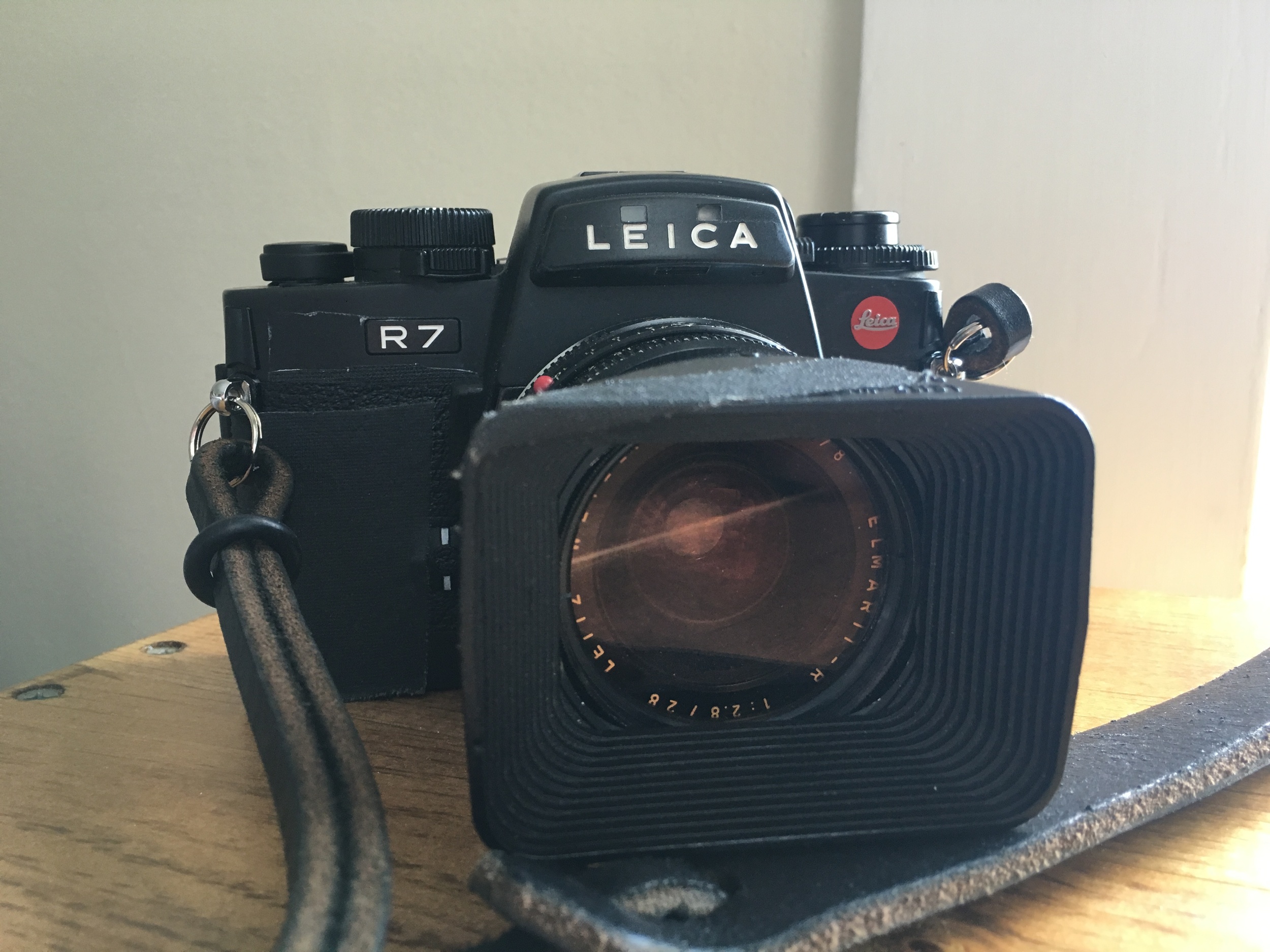
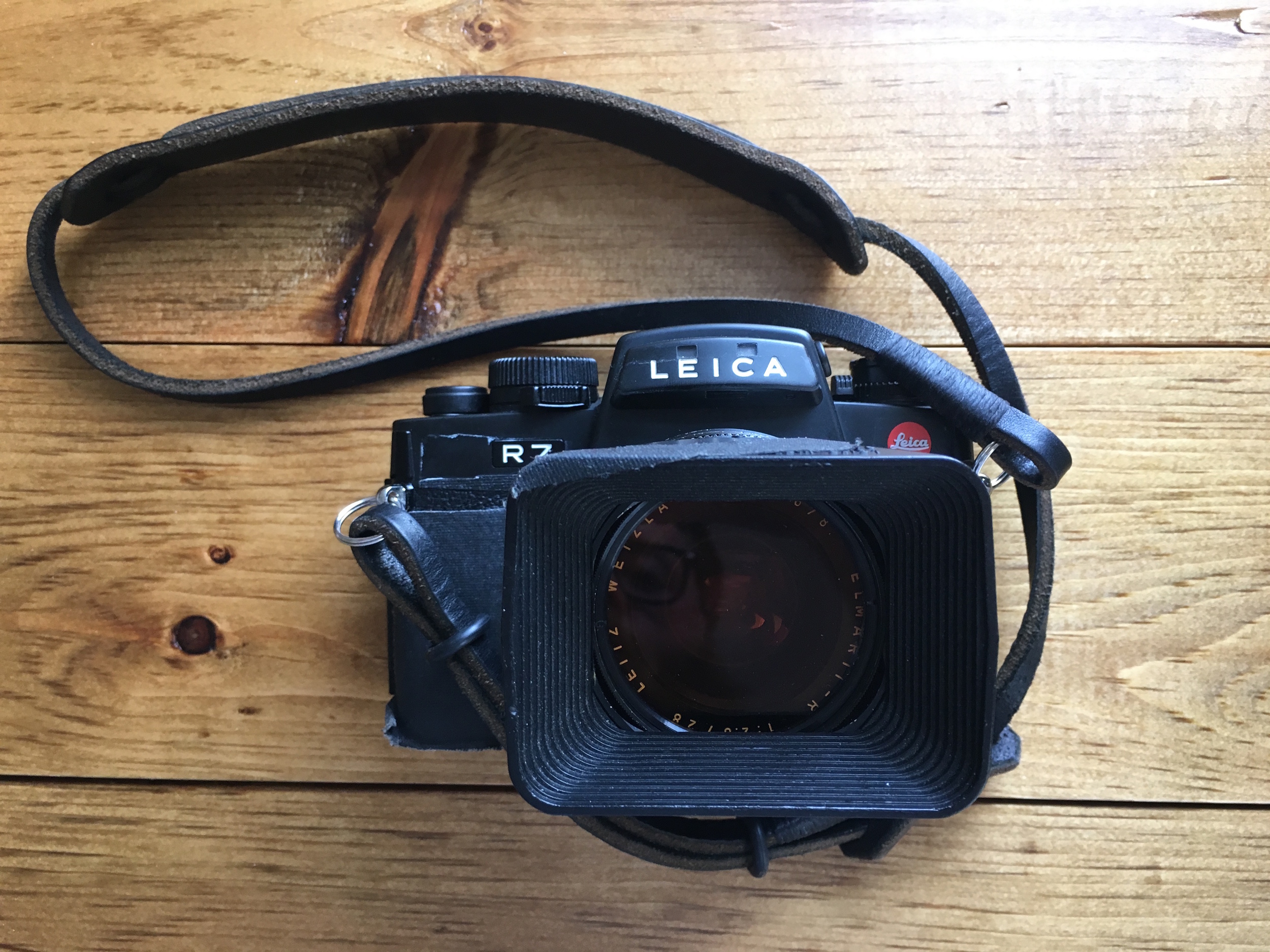
excuse the gaffers tape residue . I usually keep the logos covered. Also there is a filter on for the Cine Still 800T film. And yes that is a Gordy's camera strap I have used for two years on every camera.

excuse the gaffers tape residue . I usually keep the logos covered. Also there is a filter on for the Cine Still 800T film. And yes that is a Gordy's camera strap I have used for two years on every camera.

 The R system was Leicas way of getting in the SLR game when a lot of professionals where choosing SLRs over the Leica M series so why not just make your own SLR line, right? The Leica R7 is part of Leica's SLR line up and this is the seventh iteration that came out between 1992-1997 and was one of Leica's most advanced cameras ever. Now it wasn't the most advanced at the time considering it had no Autofocus, no auto-rewind or auto-advance, but that's the Leica way. The Leica R7 dose has some automated features with Aperture priority, Shutter priority, and Program mode. The maximum shutter speed of the Leica is 1/2000th of a second with a low shutter speed of 4seconds and bulb but the only downside is the low sync speed of 1/100th of a second. On the other side of the top plate, it has an exposure compensation dial built in with the ISO dial that goes from +3 to -3 and the ISO is is a scale of 200-12800. with those dials came some safety features of them locking inlace so they won't get bumped by accident and the shutter speed dial is a bit stiff but smooth. Now the Leica R7 has all the standard SLR features from the depth-of-field preview and self-timer and tripod mount on the baseplate. The light meter of the camera is quite good and informative with .05 increments to help get the precise exposure. Speaking of exposure the meter in manual mode is a spot meter and in A, T or P it has Full Field Integral mode that is the equivalent of Nikon's Matrix metering mode.  The meter displays the mode you are shooting in the bottom left corner, to the right of that is the aperture then the shutter speed. On the left side of the camera new, the lens is a button/switch that is a light that lights up the aperture in low light to make it easier to read. The camera is covered in plastic, which doesn't really seem Leica like but under each plastic, bob is metal which makes it feel really solid and tank like.

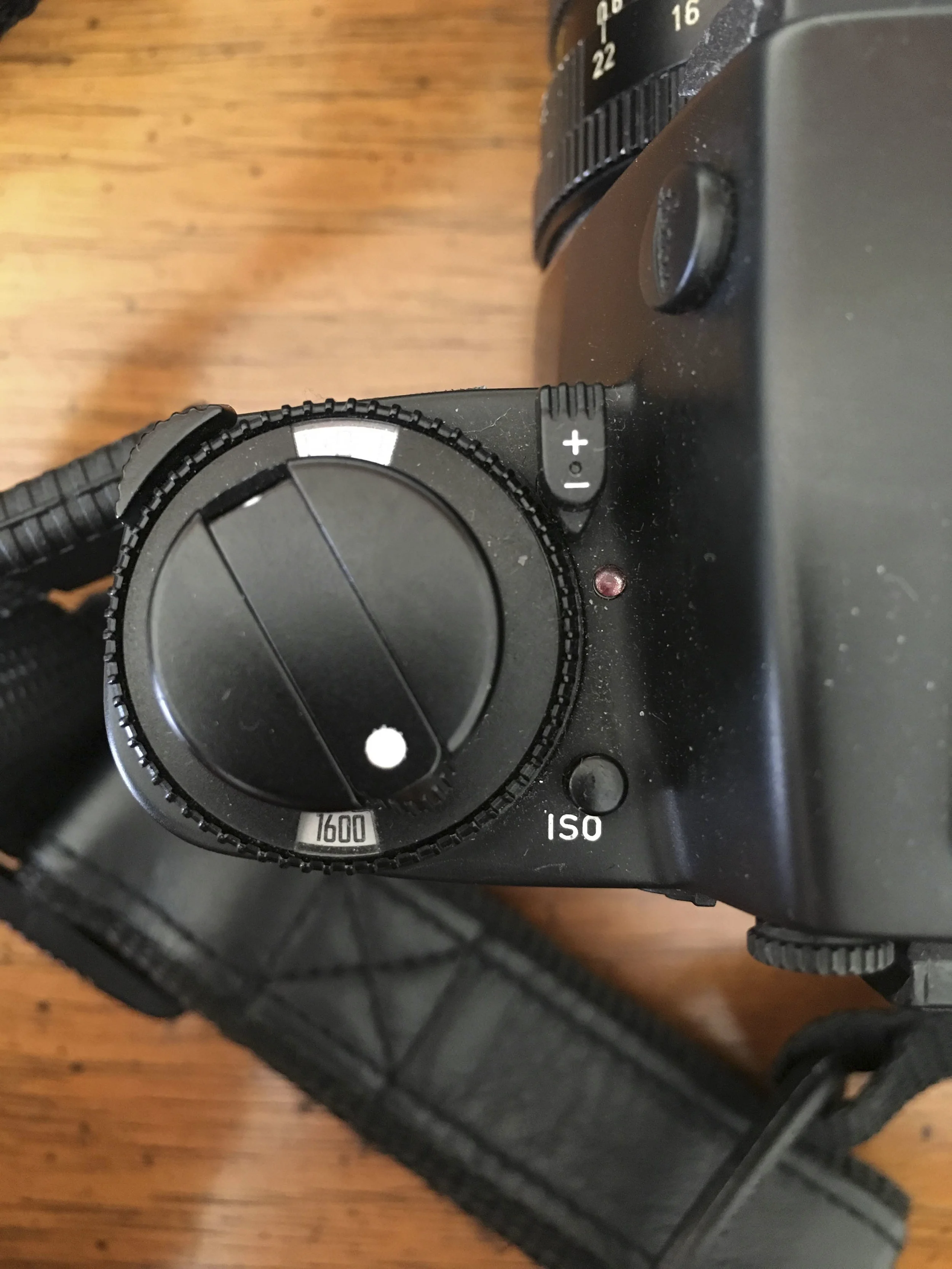
to adjust the iso you have to hold down the iso button and twist the dial to desired iso.  To operate the exposure compensation dial you move the +/- to down and to side and then move the switch on the top left of the dial to move the wheel.

to adjust the iso you have to hold down the iso button and twist the dial to desired iso.  To operate the exposure compensation dial you move the +/- to down and to side and then move the switch on the top left of the dial to move the wheel.

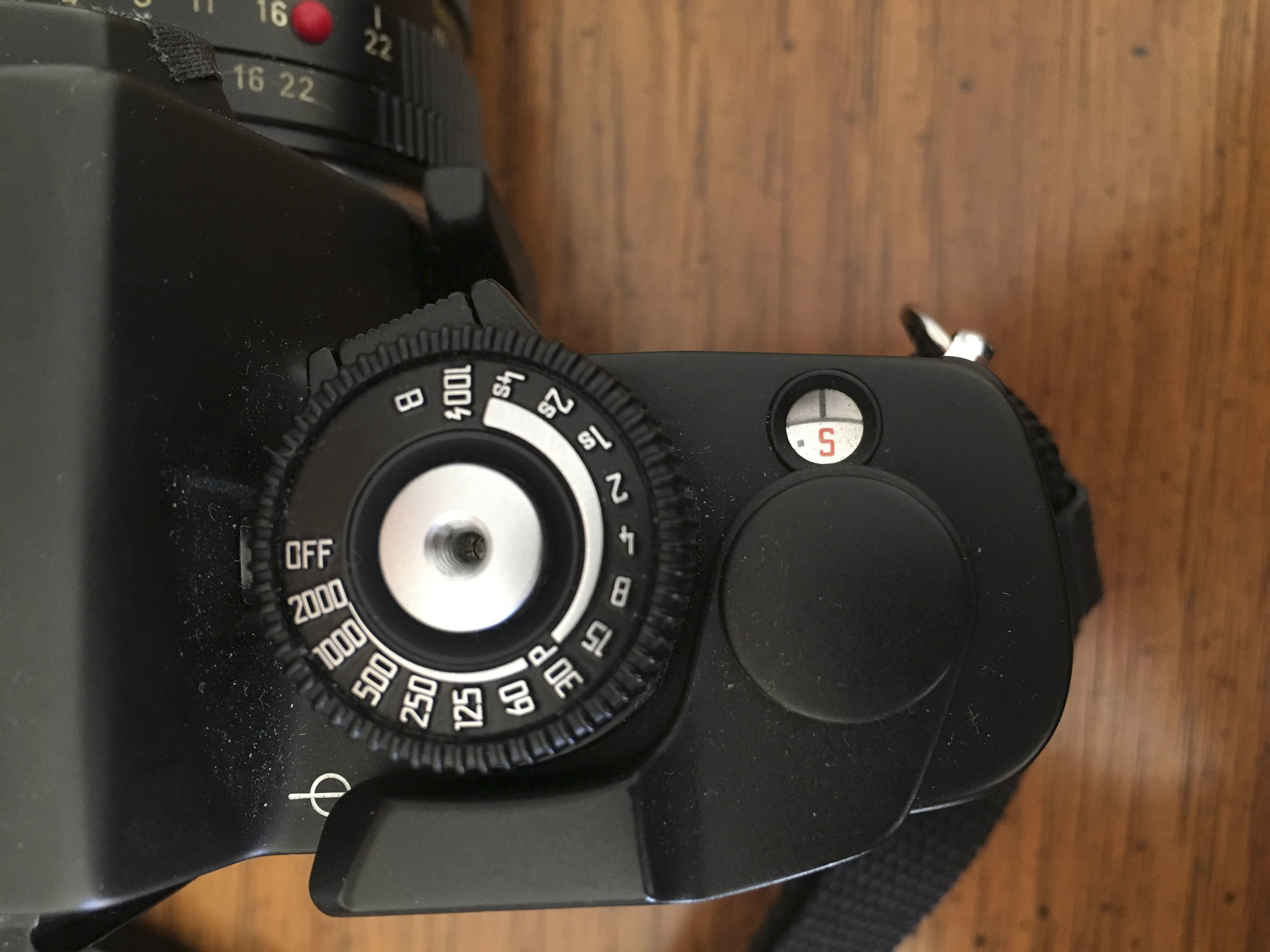
located on the shutter dial is the off button.  The button the top of the dial with push and moved to the right changed the shooting mode. The R7 also has a cable release thread.

located on the shutter dial is the off button.  The button the top of the dial with push and moved to the right changed the shooting mode. The R7 also has a cable release thread.

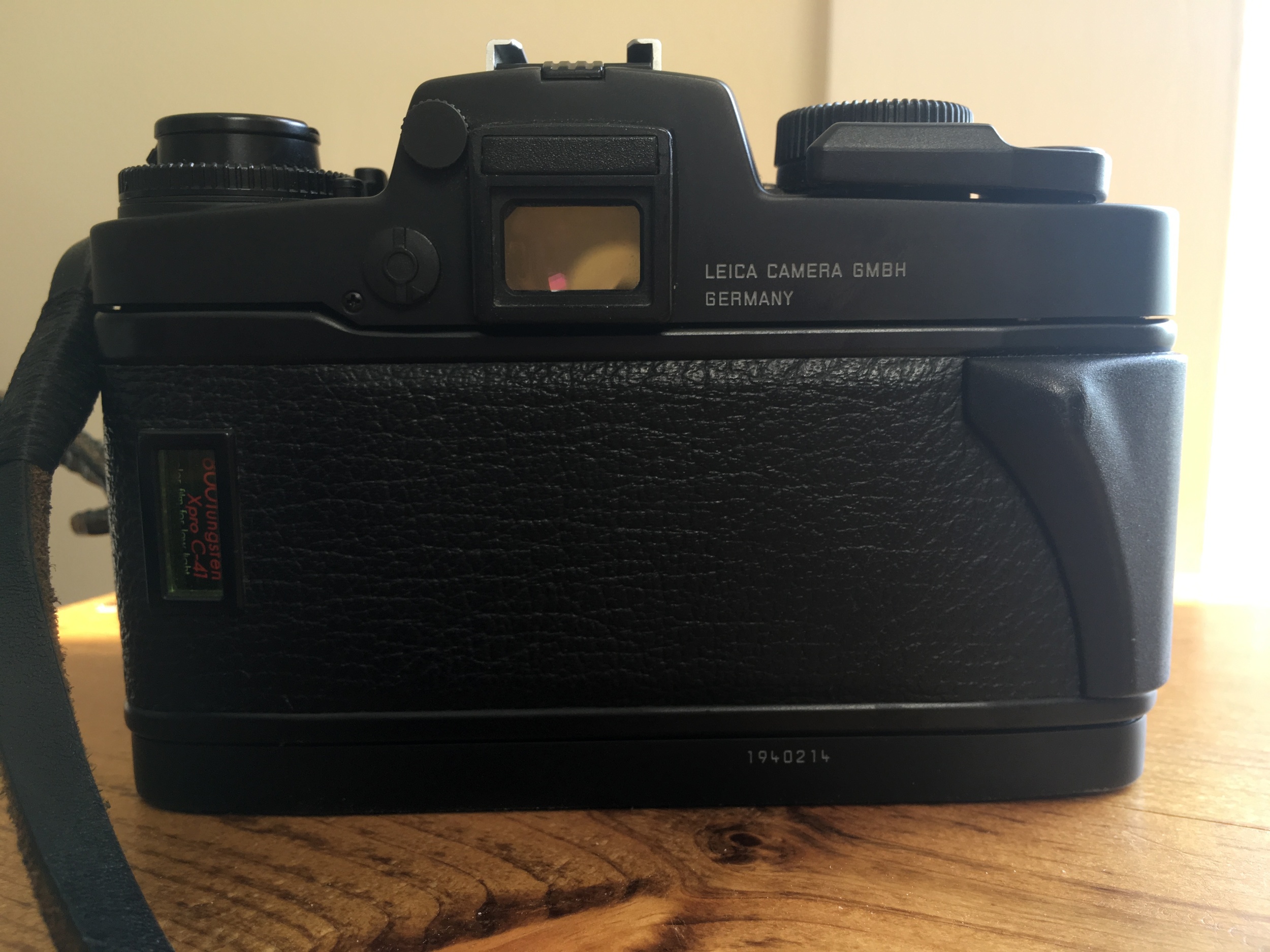
a shot of the back loaded up with some Cine Still 800T. First time shooting that.

a shot of the back loaded up with some Cine Still 800T. First time shooting that.

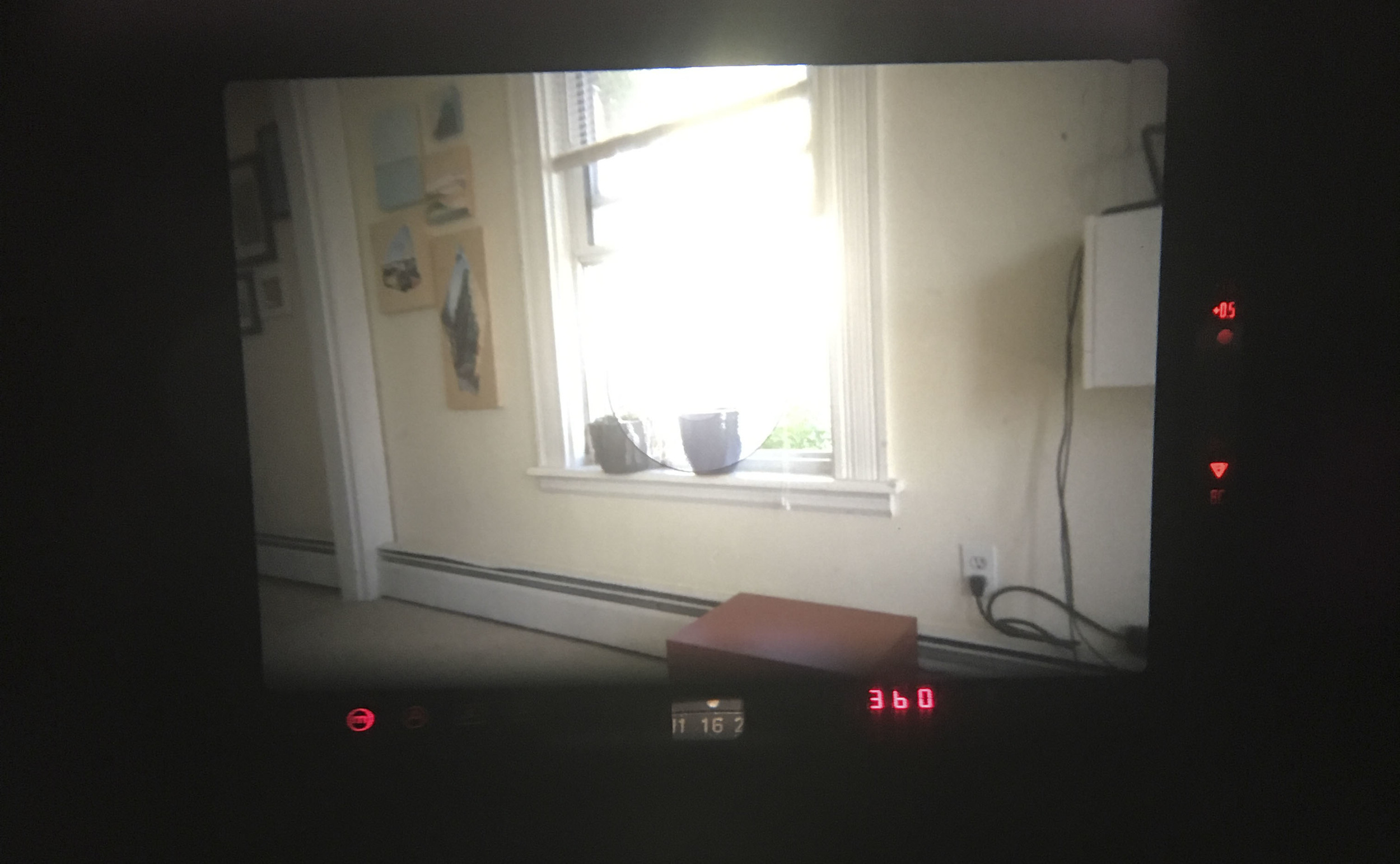
A view from the viewfinder. It is not very cluttered and its bright and the meter info is clear and cleanly layed out for you. You can also see that is it +0.5 over exposed and when exposed properly you will get a red dot in the middle.

A view from the viewfinder. It is not very cluttered and its bright and the meter info is clear and cleanly layed out for you. You can also see that is it +0.5 over exposed and when exposed properly you will get a red dot in the middle.

The Handling 

The Leica R7 feels quite amazing in the hands it's an extremely solid camera that has some heft to it that makes it feel like a serious camera. The grip of the R7 is quite good, on the back of the film back is a protruding thumb rest that seems like it helps with the grip of the camera. Then I also use the film advance lever has a thumb rest as well because the camera is a bit heavy and you need the extra rest for your thumb. The shutter speed dial sticks out enough that this perfect to use with one hand finger without moving the camera from your eye.  The viewfinder is pretty bright but not overly bright and its accurate of course since its an SLR. Honestly, it really performs like any other SLR camera.

The Not So Good

Shooting a camera every day for a long period of time you really get to know the ins and outs of the camera and the minor annoyances that come with it. Now, none of these are deal breakers for me, but they are just really just fucking annoying but you get used to it. First of all this camera is fucking heavy, about 36.95oz with the 28mm on it compared to my F3 that is 33.40 with a 50mm series E lens mounted on it. Now, 3.55 doesn't sound like a lot but lugging this thing around for 6 hours really takes a toll on your wrist but its a nice workout! Second, the fact that this camera takes 4 LR44 batteries... It seems really excessive because most film SLRs take one or two tops but in the manual, it says it takes four batteries to prevent frequently changing batteries. With that being said the batteries lasted from November to just about a month ago when I was going out to shoot and the camera batteries died and rendered the camera's shutter to only operate on Bulb or 100. Lastly, the film advance lever is probably the least well- constructed part of the camera, it doesn't feel solid compared to the rest of the camera. I have only had the camera fail on me twice once was with the batteries dying and the other was when the advance leaver went limp when I was loading the film but I believe that was user error when I was loading the film in.

Images

All images were taken with the Leica R7 and the 28mm Elmarit lens on it. For right now I have only shot black and white with this camera and when I finish the Cine Still 800T I will add those images to this! Sidenote: all shot by zone focusing. These images are from a recent trip to Boston's Haymarket, which is a current series I am working on. Also my "through the blinds" series and "All'estremità Nord"

bevbosthaym7_2_16013-2.jpg
haymarketnorthend7_2_16024.jpg
haymarketnorthend7_2_16025.jpg
bevbosthaym7_2_16011.jpg

Conclusion 

The Leica R system is honestly a fantastic system and it is/was underrated towards the M system and other SLRs but, it is outstanding. The R7 is a very robust camera and it's heavy and clunky but there is just something about it that has kept me shooting with it for the last few months and it's the lenses. Yes, this was a review of the camera but the Leica glass that attached to it makes the camera. I know people converting these lenses to other mounts that's how good they are. But back to the camera, it's a really solid camera that I haven't been able to put down in the past months. It is an extremely versatile camera that I have shot in all types of situations and conditions and it has only let me down once or twice but what camera hasn't? I would highly recommend the Leica R system whether it is this R7 or any of the others. Yes, you are getting the full Leica experience with less is more and in this sense, the less is perfect for me. This camera is smooth as jazz and a camera that I am glad I have gotten to shoot it and  I think this is one of the best SLRs I have shot next to the Nikon F3. Now it may seem as if I have my Leica goggles on and Leica is the best ever but that's not my sole reason for liking this camera at all, it just simply preforms. With that being said is this the end all be all for my SLR needs and the answer is no, in a heartbeat I believe I would go back to my Nikon F3 if I had a 28mm and then just for the viewfinder alone. But that's not the case and I don't see myself putting this camera down anytime soon.

Cheers.

Tags: leica, camera, camera review, leica camera review, leica r7, camera reblog, leica r7 review, leica slr, film camera review, film, 28mm elmarit
15 Comments
Prev / Next

Blog posts

Leica Mini Review

Polaroid 100 Land Camera Review

Update and Upcoming Posts

Billingham Hadley Pro 

How to Deal With and Understand G.A.S

A Two Dar Review Of The Fuji X-Pro 2

Leica R7 Review 

Contax TVS i Review

Olympus Mju II

Polaroid OneStep 2

Leica M4-2 Review